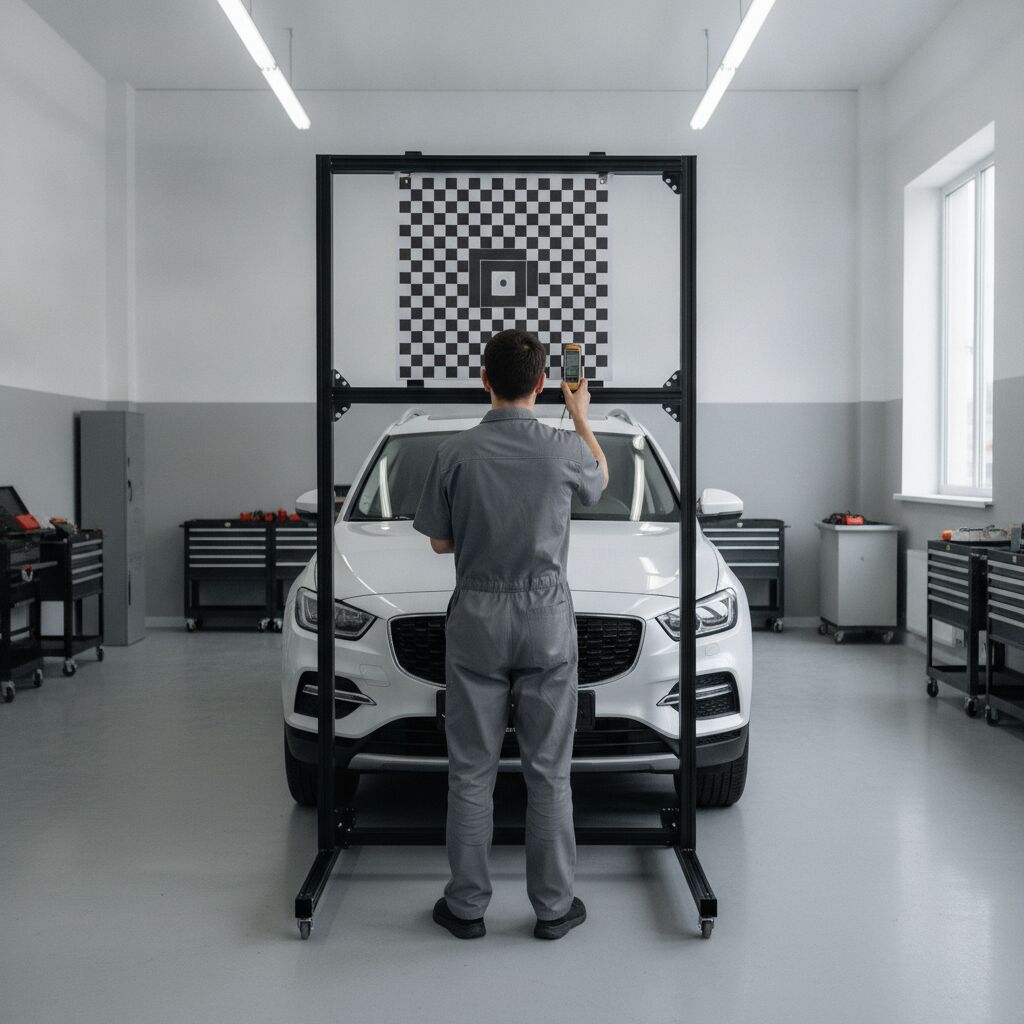
If your vehicle has lane-keeping assist, automatic emergency braking, or adaptive cruise control, it likely has a camera mounted near the windshield — and replacing that windshield can affect how well those features work unless the camera is recalibrated afterward.
Many newer vehicles have a forward-facing camera mounted at the top of the windshield, just behind the rearview mirror. This camera feeds data to driver-assist systems that help keep the vehicle in its lane, detect obstacles, and support automatic braking.
Even with a precise installation, a new windshield can shift the camera's exact positioning by a fraction of a degree — enough to affect the accuracy of what it "sees" relative to the road ahead. That small shift is why calibration is a required step after replacement on equipped vehicles, not an optional add-on.
Static calibration uses a target board positioned at a precise distance from the vehicle in a controlled setting. Dynamic calibration involves driving the vehicle under specific conditions while the system recalibrates itself. Some vehicles require one method, some require both, depending on the manufacturer's specifications.
Skipping calibration on a vehicle that requires it means those safety systems may not function as designed — potentially misjudging distances or lane position. It's a safety consideration, not just a manufacturer formality.
Had a windshield replaced recently and not sure if calibration was completed? San Tan Auto Glass can check and calibrate as needed — reach out to confirm your vehicle's status.
No obligation. Usually under 60 seconds.